
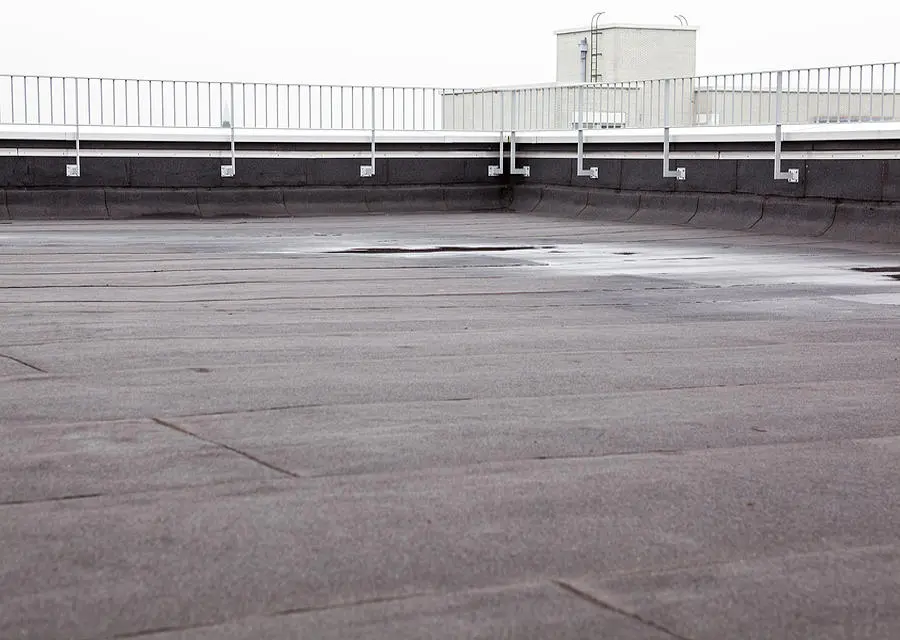
Industrial facilities in North Texas, from warehouses and manufacturing plants to distribution centers, depend on roofs that protect equipment, inventory, and the people working below. Choosing a roofing system for this type of building is a different decision than choosing one for a home or small office. Large roof areas, rooftop equipment, process exhaust, and long service expectations all shape which options make sense. For facility owners and managers in Dalworthington Gardens and across the Dallas-Fort Worth area, the right choice usually comes from matching a system to how the building actually operates. This guide outlines the systems commonly used on industrial buildings, the factors that tend to narrow the options, and how to plan for industrial roofing in Texas over the full life of a facility.
Common Roofing Systems for Industrial Buildings
Most industrial buildings have low-slope roofs, which limits the options to systems designed to handle water on a nearly flat surface. Each system offers a different balance of durability, maintenance needs, and cost.
Single-Ply Membranes
Single-ply membranes such as TPO, PVC, and EPDM are widely used on industrial buildings because they can cover large areas efficiently. TPO and PVC are typically white or light-colored and are joined with heat-welded seams, while EPDM is a synthetic rubber membrane that is often black and joined with adhesives or tapes. PVC is often chosen where a roof may be exposed to oils, grease, or certain chemicals, since it tends to resist these substances better than some other membranes. Membrane thickness, attachment method, and the insulation beneath all affect how the system performs over time.
Multi-Ply and Metal Systems
Built-up roofing and modified bitumen use multiple layers to create a thick, redundant barrier that can hold up well to foot traffic and punctures. These systems have a long history on commercial and industrial buildings. Metal roofing, including standing seam panels, is another option, particularly on pre-engineered steel buildings that were designed for it. Metal can offer a long service life when properly maintained, although fasteners, seams, and penetrations need periodic attention. Spray polyurethane foam and fluid-applied coatings are also used in some cases, either as new systems or as a way to extend the life of an existing roof. The table below summarizes how these systems generally compare.
| System | Common Strengths | Considerations |
|---|---|---|
| TPO or PVC membrane | Reflective surface and heat-welded seams | Can be punctured by dropped tools or debris |
| EPDM membrane | Flexible rubber with a long history of use | Often dark in color; seams rely on adhesives or tape |
| Built-up or modified bitumen | Multiple layers with good puncture resistance | Heavier than single-ply systems |
| Metal panels | Long service life with proper care | Fasteners and seams need periodic inspection |
| Spray foam or coatings | Seamless surface that can go over some existing roofs | Needs suitable conditions and periodic recoating |
Factors That Shape the Right Choice
No single roofing system is best for every industrial building. The right fit depends on the facility’s operations, structure, and long-term plans.
Operations and Rooftop Exposure
Start by looking at what happens on and above the roof. Exhaust from manufacturing processes, cooking operations, or chemical storage can affect certain membranes, so compatibility with any substances that reach the roof surface matters. Facilities with heavy rooftop equipment, frequent maintenance visits, or solar arrays may benefit from systems with stronger puncture resistance and designated walkway pads. Worker safety also plays a role in roof design, and the Occupational Safety and Health Administration’s fall protection guidance outlines requirements that apply when crews work at height.
Heat, Storms, and Energy Use
Texas summers place sustained heat on large, flat roof surfaces, and that heat can increase cooling demand inside the building. According to cool roof information from the U.S. Department of Energy, cool roofs reflect more sunlight than conventional roofs, and their cooling benefits tend to be greatest in hot climates. Reflective membranes and coatings may help reduce heat gain, although results vary based on insulation, building use, and other factors. Storm resistance is equally important in North Texas, where hail and high winds are common, so wind uplift ratings, impact resistance, and edge securement are worth discussing with a roofing contractor.
Structure, Drainage, and Existing Conditions
The building’s structure determines how much weight a roof can carry, which affects whether heavier systems or recover approaches are practical. Drainage design is another key factor, since ponding water can shorten the life of many low-slope systems. A professional evaluation of the existing roof, including moisture in the insulation and the condition of the deck, can show whether the roof is a candidate for restoration, recovery, or full replacement.
Planning for Long-Term Performance
The roofing system is only part of the decision. How the project is planned and how the roof is maintained afterward can influence performance just as much.
Thinking in Terms of Life-Cycle Value
Upfront cost is important, but it is only one part of the picture. A system with a higher initial cost may require less maintenance or last longer under certain conditions, while a lower-cost option may make sense for a building with a shorter planned lifespan. Warranty terms, expected maintenance, energy performance, and the disruption involved in future repairs can all factor into the comparison. Asking for proposals that explain these trade-offs, rather than only listing a price, can make the options easier to compare.
Minimizing Disruption During Installation
Industrial facilities often need to keep operating while roof work takes place. Phasing the project, scheduling noisy or odorous work around production hours, and protecting interior areas below the work zone may help limit interruptions. Clear communication between the facility team and the roofing crew about access points, staging areas, and safety procedures can keep the project organized from start to finish.
Finding the Right Fit for Your Facility
Choosing a roofing system for an industrial building involves weighing operations, climate, structure, and long-term costs together rather than focusing on one factor alone. A careful evaluation of how your facility uses its roof can help narrow the options and support a decision that fits your goals. At Rainstone Roofing, we work with facility owners and managers to assess existing roofs, explain the strengths and limitations of each system, and plan projects around day-to-day operations. As Dalworthington Gardens industrial roofing contractors, our team understands the heat and storm conditions that North Texas industrial buildings face. If you are planning a new roof or weighing whether to replace an aging one, we welcome the chance to talk through your options.

Field Operations Director
With over 30 years of hands-on experience in the residential and commercial roofing industry, Scott Marestein has done it all — from installer to Vice President of Operations, managing projects ranging from 5 to 20,000 squares across five states. A seasoned estimator, project manager, and sales professional, Scott has built relationships with national accounts including Whataburger, Darden Restaurants, and the U.S. Postal Service.